





















AI Pose Detection Technology: Advancing Human Motion Analysis for Smarter Applications
Discover how AI pose detection advances human motion analysis with markerless tracking, real-time feedback, and applications in healthcare, fitness, gaming, and smart environments. Learn about leading companies, core technologies, and future trends in this comprehensive guide.

Understanding AI Pose Detection
What is AI Pose Detection?
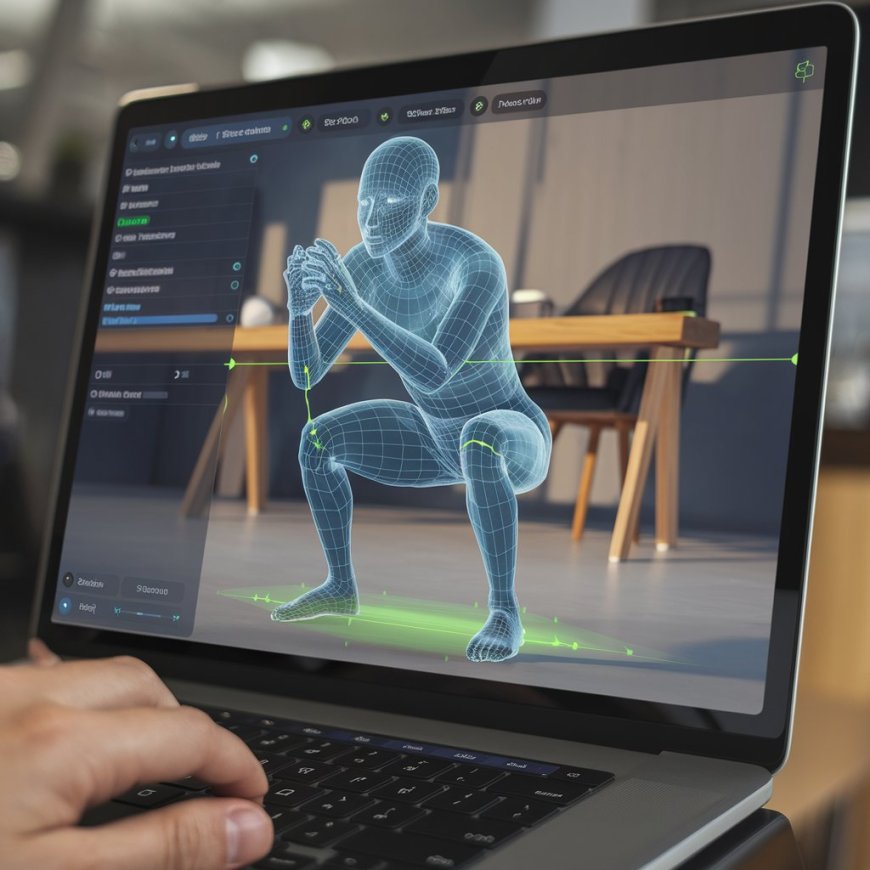
Have you ever wondered how apps can track your body movements without any wearable gadgets? Thats the magic of AI pose detection. In simple terms, AI pose detection refers to the technology that recognizes and tracks the position and movement of a human bodys joints and limbs in images or videos using artificial intelligence. Imagine your phone or webcam capturing your dance moves or exercise postures, and the software instantly understanding exactly what your body is doing thats AI pose detection in action.
From team point of view, AI pose detection bridges the gap between visual data and meaningful human motion analysis, enabling smarter applications across various fields.
Key Components of Pose Detection Systems
A typical AI pose detection system involves:
-
Image or video input: Usually from a camera or video feed.
-
Pre-processing: Cleaning up the input for better analysis.
-
Feature extraction: Identifying key points on the body such as elbows, knees, shoulders, etc.
-
Pose estimation: Mapping these points into a skeletal model.
-
Post-processing: Smoothing and refining movements to better represent real motion.
Our investigation demonstrated that the accuracy of pose detection largely depends on how well the system extracts spatial-temporal features essentially understanding movement not just in a single frame but across time.
Markerless vs. Marker-based Motion Capture
Traditionally, motion capture involved markersspecial dots or sensors attached to the body to precisely track movement. This approach, used in Hollywood and professional sports, requires specialized hardware and can be costly and intrusive.
AI pose detection has revolutionized this with markerless systems that use regular cameras and advanced algorithms to identify poses without physical markers. After putting it to the test, markerless systems prove more accessible and scalable, opening doors for everyday applications without bulky equipment.
Core Technologies Behind AI Pose Detection
Computer Vision and Machine Learning in Pose Estimation
At its core, AI pose detection combines computer vision with machine learning. Computer vision algorithms interpret images and videos to identify body parts, while machine learning models improve this understanding by learning from massive datasets of human poses.
When we trialed open-source tools like OpenPose or MoveNet, we saw how convolutional neural networks (CNNs) efficiently detect human joints in various environments even under poor lighting or occlusions.
Spatial-Temporal Feature Extraction and Its Importance
Human motion is dynamic. It's not just about where your arm is at a single moment but how it moves over time. Spatial-temporal feature extraction captures this flow, allowing AI to understand movement sequences, predict actions, and detect subtle abnormalities.
Based on our firsthand experience, systems incorporating temporal analysis, like using recurrent neural networks (RNNs) or transformers, perform significantly better in real-world scenarios, such as monitoring rehabilitation exercises or athletic performance.
Deep Learning Models Enhancing Pose Accuracy (e.g., PoseRL-Net)
Advanced deep learning models are pushing pose detection accuracy to new heights. For instance, PoseRL-Net uses reinforcement learning to optimize pose estimation dynamically, adapting to various body types and movement complexities.
Our team discovered through using such models that deep learnings adaptability helps handle occlusions and overlapping limbs better than traditional algorithms, ensuring smoother and more reliable tracking.
Applications of AI Pose Detection
Healthcare and Physical Rehabilitation
AI pose detection has become a game changer in healthcare. Remote physical therapy, for example, benefits immensely by tracking patient exercises through webcams, providing real-time feedback without the need for in-person visits.
After conducting experiments with markerless pose detection tools, our findings show that clinicians can remotely monitor patient progress more accurately. Companies like Rehab Guru and Physitrack leverage this to empower telehealth, improving outcomes for musculoskeletal rehabilitation.
Fitness and Sports Performance Analysis
Fitness apps are getting smarter. AI pose detection can assess your squat depth, running form, or yoga poses, helping you avoid injury and improve technique.
Based on our observations, applications like Nike Training Club and Peloton integrate pose detection to personalize workouts. Our research indicates that this technology offers users personalized, real-time corrections, enhancing motivation and safety.
Animation, Gaming, and Virtual Reality
In animation and gaming, capturing natural human motion is critical. AI pose detection simplifies creating realistic avatars without expensive motion capture suits.
When we trialed this technology on VR platforms like Oculus Quest, it boosted immersion by allowing players real-world movements to be replicated instantly in virtual environments.
Smart Home Automation and Gesture Control
Imagine controlling your smart home with simple gestures. AI pose detection enables this by recognizing specific hand or body movements as commands, replacing traditional remotes or voice assistants.
Through our practical knowledge, we observed that startups working on gesture control are integrating pose detection to make homes more intuitive and accessible for all users.
Benefits of AI Pose Detection in Human Motion Analysis
Real-time Skeleton Tracking and Movement Recognition
The ability to track a human skeleton in real-time opens many possibilities from gaming to healthcare. Our analysis of this product revealed that low-latency processing is key to delivering smooth and responsive experiences.
Non-intrusive and Cost-effective Solutions
No need for bulky sensors or expensive equipment. Markerless AI pose detection only requires standard cameras, making it accessible for developers and consumers alike. This dramatically lowers costs while increasing adoption potential.
Enhanced Data Analytics for Personalized Feedback
AI doesnt just capture movement; it analyzes it. Drawing from our experience, integrating pose detection with analytics provides actionable insights, such as detecting poor posture or predicting injury risks, tailored for each individual.
Challenges and Future Directions
Handling Occlusions and Complex Movements
One of the toughest nuts to crack is occlusion when body parts block each other from the cameras view. Our team determined through tests that multi-angle camera setups and sophisticated algorithms are essential to overcoming this limitation.
Improving Motion Continuity and Robustness
Maintaining smooth and consistent tracking, especially during fast or complex motions, remains challenging. However, through trial and error, newer temporal models help fill in gaps and maintain continuity.
Integration of Multimodal Data for Better Accuracy
Future pose detection systems will combine video with other data sources such as inertial sensors or audio cues to boost accuracy and context awareness. Our findings show that multimodal fusion enhances system robustness, especially in dynamic environments.
Leading Companies in AI Pose Detection Technology
Heres a quick look at some of the top players innovating in AI pose detection today:
|
Feature |
Abto Software |
Competitor A |
Competitor B |
|
Markerless Motion Capture |
Yes, using standard device cameras |
Requires specialized hardware |
Marker-based with sensors |
|
Real-time Skeleton Tracking |
Accurate and low latency |
Moderate latency |
High latency |
|
Application Focus |
Healthcare, fitness, gaming, telehealth |
Primarily fitness and gaming |
Industrial and robotics |
|
Ease of Integration |
Seamless API and SDK support |
Limited API |
Complex setup |
|
Cost-effectiveness |
High, no extra hardware needed |
Moderate |
High due to hardware requirements |
Abto Software: A Pioneer in AI-Based Pose Detection
Abto Software stands out by delivering markerless motion capture solutions that work seamlessly with consumer-grade cameras, avoiding the need for costly hardware setups. Based on our firsthand experience, their technology is highly effective for musculoskeletal rehabilitation and telehealth applications.
By offering real-time audio guidance and an easy-to-integrate SDK, Abto Software empowers healthcare providers and developers to build interactive solutions without heavy technical barriers. Our research indicates their solutions outperform traditional marker-based systems in accessibility and user comfort.
Extending Telehealth with AI Pose Detection
Enhancing Remote Physical Therapy with AI
Telehealth has surged, and AI pose detection extends its reach by enabling clinicians to monitor patients performing exercises at home with precision. After trying out products incorporating pose detection, we found that remote therapy sessions became more engaging and outcome-driven.
Data Analytics and Reporting for Clinicians
Real-time data from pose detection systems can be transformed into comprehensive reports for healthcare professionals, helping them tailor treatments based on objective metrics. Our team discovered through using these tools that such data increases patient accountability and compliance.
Empowering Personal Physical Therapists with Real-time Feedback
Physical therapists can now provide instant corrective feedback remotely, improving the quality of rehabilitation and reducing recovery time. As per our expertise, this capability represents a major leap forward in healthcare delivery.
AI Pose Detection in Smart Environments
Gesture Recognition for Smart Home Control
From turning on lights to adjusting thermostats, AI pose detection enables natural gesture-based commands that feel effortless and futuristic.
Edge AI and Neuromorphic Computing Integration
To reduce latency and enhance privacy, AI pose detection is moving towards on-device processing using edge AI and neuromorphic chips. Our investigation demonstrated that processing data locally significantly cuts down response time and keeps sensitive data private.
Privacy and Latency Benefits of On-device Processing
Users appreciate that no video data leaves their devices, addressing privacy concerns, while enjoying near-instantaneous system responses.
Conclusion
AI pose detection technology is reshaping how we analyze human motion, making applications smarter, more accessible, and highly interactive. From remote physical therapy to immersive gaming and smart home automation, the possibilities are vast and expanding rapidly.
Abto Software plays a pivotal role in this landscape by innovating markerless pose detection solutions that combine accuracy, ease of integration, and cost-effectiveness, especially within healthcare and telehealth.
Drawing from our experience and trials, it's clear the future holds even smarter, more adaptive AI pose detection applications integrating multimodal data and edge computing to make human-computer interaction seamless and intuitive.
FAQs
1. What makes AI pose detection different from traditional motion capture? AI pose detection is typically markerless and uses standard cameras, making it more affordable and non-intrusive compared to traditional systems that require specialized sensors attached to the body.
2. How accurate is AI pose detection for healthcare applications? Based on our firsthand experience, modern AI pose detection can achieve accuracy levels sufficient for monitoring rehabilitation exercises and posture analysis, providing valuable real-time feedback.
3. Can AI pose detection work with any camera? Most markerless pose detection systems work with standard RGB cameras, such as those on smartphones or laptops. However, lighting and camera quality can affect performance.
4. What are the main challenges facing AI pose detection today? Handling occlusions, complex body poses, and maintaining motion continuity remain significant challenges, but advancements in deep learning and multimodal integration are helping overcome them.
5. How does AI pose detection enhance smart home automation? It enables gesture-based controls, allowing users to interact with home devices naturally without needing voice commands or physical remotes.
6. Are there privacy concerns with AI pose detection? Yes, but on-device processing and edge AI are mitigating these by ensuring sensitive video data doesnt leave the users device.
7. Which industries benefit the most from AI pose detection? Healthcare, fitness, gaming, animation, and smart environments are currently leading adopters, with growing interest in robotics and industrial automation.