























How India and Europe Are Defining the Next Chapter of the Global Cosmetic Market

The global beauty industry is in the midst of a transformative eradriven by conscious consumers, ingredient transparency, and tech-powered personalization. While Europe has long been a powerhouse in high-end, regulated cosmetic manufacturing, India is emerging as a fast-growth market shaped by cultural heritage and digital-first consumer habits.
According toEurope Cosmetic Market, the continent is witnessing steady expansion, with an emphasis on clean beauty, anti-aging products, and sustainable packaging. Meanwhile, the India Cosmetic Market is experiencing rapid evolution, with rising disposable incomes, influencer-led D2C brands, and demand for natural and herbal cosmetics reshaping consumer behavior.
Together, these two markets highlight the growing divergenceand synergybetween legacy beauty sophistication and new-age, hyperlocal innovation.
Europe Cosmetic Market: Regulated, Responsible, and Reassuring
Europe is often considered the gold standard in global cosmeticsthanks to its stringent regulatory environment, world-class R&D, and globally recognized brands like L'Oral, Nivea, Clarins, and The Body Shop.
According to the Europe Cosmetic Market size, growth is being driven by:
-
Aging Demographics: Rising demand for anti-aging, wrinkle-reducing, and collagen-boosting products.
-
Green Beauty Movement: Eco-certifications, vegan formulations, and zero-waste packaging are becoming standard for premium and mass brands alike.
-
Pharma-Cosmetics: Growth in dermo-cosmetics and prescription-strength skincare, often sold through pharmacies and aesthetic clinics.
-
Regulatory Trust: EU cosmetic directives ensure ingredient safety, fostering higher consumer confidence compared to many other regions.
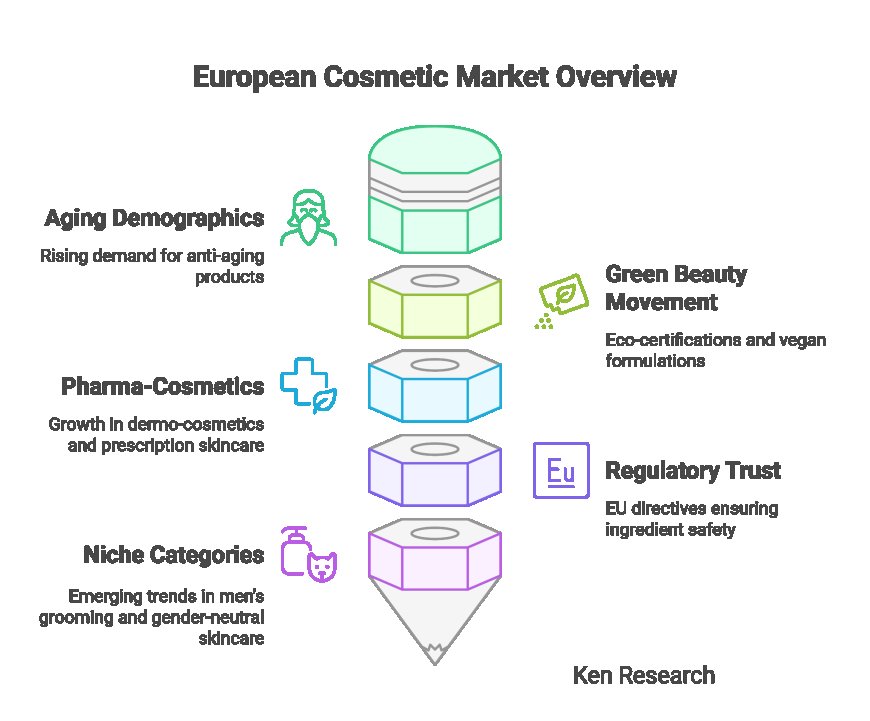
The Europe cosmetic industry trends also show that niche categories like mens grooming, gender-neutral skincare, and probiotic facial care are gaining traction in countries like France, Germany, and Italy.
India Cosmetic Market: Where Tradition Meets TikTok
Indias beauty sector is one of the fastest-growing in Asia. Fueled by the dual power of Ayurveda and Instagram, Indian consumers are embracing everything from herbal skincare to K-beauty-inspired routines.
As noted in the India Cosmetic Market, this growth is supported by rising per capita income, expanding beauty retail networks, and a dramatic shift in consumer awareness.
Key Growth Drivers in India:
-
D2C Boom: Brands like Sugar, Mamaearth, and WOW Skin Science are scaling via influencer-led digital marketing and ecommerce.
-
Natural Ingredients & Ayurveda: Turmeric, neem, aloe vera, and sandalwood continue to dominate product labels.
-
Urban-Rural Bridge: Affordable SKUs and mobile commerce are taking beauty deeper into Tier II and III towns.
-
Youth-Centric Trends: Gen Z consumers prefer cruelty-free, paraben-free, and multifunctional beauty solutions with aesthetic packaging.
The India cosmetic industry trends also reveal a surge in categories like mens skincare, baby grooming products, and natural hair colorantsespecially in metros and semi-urban clusters.
India vs Europe: Same Canvas, Different Palette
| Category | Europe Cosmetics Market | India Cosmetics Market |
|---|---|---|
| Consumer Priorities | Anti-aging, clinical efficacy, sustainability | Affordability, tradition, influencer appeal |
| Channel Mix | Pharmacies, high-street, specialty stores | D2C, ecommerce, general trade |
| Dominant Categories | Skincare, perfumes, dermo-cosmetics | Skincare, color cosmetics, hair care |
| Key Differentiator | Regulation, heritage brands, green formulations | Ayurveda, digital-native brands, herbal formulations |
| Market Challenges | Product saturation, high R&D cost | Low brand loyalty, informal distribution |
Despite different consumption patterns, both markets are prioritizing authenticity, results, and transparencyjust in different formats and pricing tiers.
Shared Challenges in the Beauty Industry
While their strengths differ, both India and Europe face challenges that could slow momentum if unaddressed:
In Europe:
-
Innovation Fatigue: An overload of me-too brands and minimal ingredient differentiation in saturated categories.
-
Sustainability Scrutiny: Meeting net-zero packaging mandates while maintaining luxury feel is a growing concern.
-
Aging Retail Models: Traditional department store beauty counters are losing relevance among younger consumers.
In India:
-
Regulatory Gaps: "Natural" and "herbal" claims are still poorly defined in official frameworks.
-
Quality vs. Price Tradeoff: Some brands compromise on ingredient safety to stay competitive in pricing.
-
Scalability: Indie brands often face difficulty scaling across offline retail or exporting due to compliance issues.
The Road Ahead: Global Standards, Local Identity
Looking forward, both markets are likely to converge on clean, effective, and ethically branded beautybut their paths will differ.
-
India will continue to build D2C-first beauty unicorns rooted in cultural relevance, smart pricing, and hybrid distribution.
-
Europe will double down on science-backed innovation, sustainability leadership, and long-term consumer trust.
-
Cross-pollination is also expected: Indian brands expanding to NRIs and diaspora markets, and European brands sourcing Ayurvedic actives to meet demand for clean yet exotic formulations.
As ingredient-savvy, digitally empowered consumers rise across both regions, brands will need to build not just products, but experiencespersonalized, shareable, and socially conscious.
Final Thoughts
The cosmetics industry is no longer segmented by geographyits defined by mindset. Europe continues to lead in quality, regulation, and R&D, while India is winning in volume, digital innovation, and cultural connection.
Together, these two markets represent the future of beauty: a blend of heritage and innovation, ancient wisdom and AI-powered skincare routines, mass-market reach and niche, high-margin personalization.