






















Personal Trainers in Your Pocket: How App Developers Are Changing the Fitness Game
Discover how fitness app developers are revolutionizing workouts by turning smartphones into personal trainers. Explore the latest trends in mobile fitness technology and how it's reshaping the way we stay healthy.
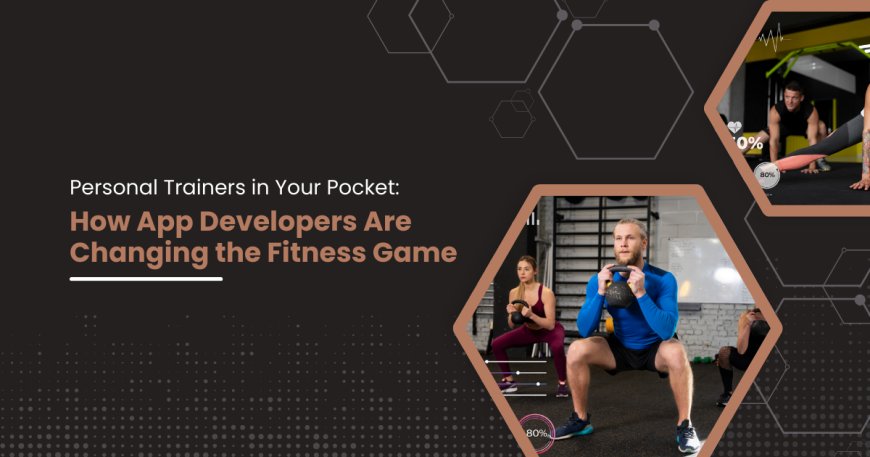
In 2024, 65% of smartphone users downloaded at least one fitness app. Users who log workouts daily increase activity by 30%. A well?built app can cut gym cancellations by 20%. A Fitness App Development Company combines technical expertise and user?focused design to craft these tools. Through specialized Fitness App Development Services, developers layer features like workout tracking, analytics, social support, and AI coaching. This article explains the technical foundations and choices behind modern fitness apps, and shows how developers build solutions that bring personal trainers into users pockets.
Why Fitness App Development Companies Matter
Companies delivering fitness apps bridge two worlds: human fitness and software engineering. They gather requirements from trainers and users, assess performance needs, and select technologies. They work across mobile platforms (iOS, Android) and server backends. They ensure features run smoothly on wearables and smart devices. Through APIs and automation, they add features like video coaching and biometric tracking. Their role supports an apps success, usability, and long?term scalability.
Core Features of Modern Fitness Apps
Fitness apps include multiple modules:
-
Workout library with videos, descriptions, and filters
-
Workout tracking, complete with timers, sets, and analytics
-
Health integrations pulling data from devices like wearables
-
Coach feedback through chat or video
-
Progress analytics displaying trends and achievements
-
Social features, enabling challenges or group workouts
-
Notifications prompting workouts, hydration breaks, and rest
Each component requires careful technical design.
Tech Tools Under the Hood
A high?performing fitness app relies on a smart tech stack.
1. Mobile Frontend
Developers use frameworks like React Native or Flutter for cross?platform apps. Native options like SwiftUI and Jetpack Compose deliver smooth animations and low?latency tracking. Technical priorities include accurate sensor data, real?time metrics, and responsive UIs.
2. Backend Infrastructure
Backend services handle workout metadata, user profiles, and analytics. Developers often choose Node.js or Python (Django/Flask) frameworks. Databases store user sessions, progress data, and coach comments. Options include PostgreSQL for relational data and MongoDB for flexible logs. Workout pipelines may use task queues like RabbitMQ for processing large datasets.
3. Wearable and Sensor Integration
Fitness features often connect with wearable devices (Apple Watch, Garmin, Fitbit). Developers build integrations over HealthKit, Google Fit, or custom BLE workflows. They handle live metrics: heart rate, cadence, steps and ensure consistent sampling. Data syncing includes error correction, retries, and offline buffering.
4. Video and Chat Services
Coach interaction often uses video or chat. Developers integrate third?party services like Twilio or WebRTC. For video coaching, they implement low?latency systems with adaptive bitrate and encryption. Chat modules use real?time components like Socket.IO or Firebase. Media storage needs auto-purging, CDN hosting, and secure playback.
Workout Tracking: Accurate and User-Friendly
Recording workouts must feel seamless. The technical team designs screens for exercise tracking, timers, and real?time metrics. They record video or sensor feedback to ensure reps match visible cues. Measurement accuracy is critical for credibility.
They also support offline tracking. Data gets cached until internet connectivity returns. Upon sync, timestamps, workout metadata, and sensor logs merge without loss or duplication.
Data Analytics and Progress Insights
Users expect dashboards showing progress over time. The platform calculates metrics such as total weight lifted, average workout duration, calorie burn. It detects anomalies or plateaus, and suggests rest or progression.
Developers build time-series processing pipelines using technologies like Apache Kafka or AWS Kinesis. Visualizations use charting libraries like D3.js or Chart.js. Backend precomputes aggregates to support smooth UI performance.
Adaptive Workouts via AI and Logic
Smart workouts adapt to user performance. A Fitness App Development Company may include algorithmic workout planning. They craft rule-based systems or AI models that adjust rest times and weight based on progress.
Technically, they can use on-device models (TensorFlow Lite) or server-side inference pipelines. Weight prediction models adapt to test sets. Challenge logic can suggest increases to avoid injury. Systems must balance data volume and privacy.
Notifications and Habit Building
Reminders help keep users active. App developers create systems that schedule notifications for workouts, hydration, post-workout feedback requests, and rest days. These alerts integrate with calendar APIs and local notification systems.
Smart reminders adjusted based on user history missed workouts may trigger encouragement, not nagging. Developers build customizable templates and backend schedulers to manage thousands of users without overload.
Social and Challenge Modules
Modern apps include leaderboards, group challenges, and friend activities. Developers implement these through real-time event systems. When a user completes a cardio session, a leaderboard updates instantly using pub/sub architectures. They also design secure social systems. Privacy settings let users hide activity data. Challenges use stable hashing to prevent cheating. Moderation modules flag suspicious activity.
Security, Privacy, and Compliance
Fitness apps deal with health data that may be regulated. Developers must:
-
Use TLS encryption for all data in transit
-
Encrypt personal data at rest with AES-256
-
Implement authentication via OAuth2, JWT tokens, and refresh tokens
-
Log reviewer and coach data changes
-
Provide data deletion on user request (GDPR, CCPA compliance)
If connecting with HealthKit, apps must review and respect Apple privacy policies. Developers include secure onboarding flows and periodic access audits.
Scalability and Performance Needs
Popular apps must scale to thousands of users. Backend services need load-balanced Node.js or Python nodes. Databases partition data by user ID or region. Caching stored assets prevents repeated calls for workout media or 3D animation files.
Media uploads get routed to AWS S3 or CDN. Cache invalidation logic ensures updates for workout changes or coach edits. Developers monitor performance via Grafana and Prometheus for CPU, response times, and request queue sizes.
Also Read: Fitness App Development Cost: MyFitnessPal, Nike Training Clone
Editorial Workflows for Coaches
Fitness content gets managed through a content pipeline. Coaches build workouts with video, images, instructions, and tags. Developers create UIs to compose this content, tag entries, preview formatting, and publish schedules.
They use background processes to transcode video, generate thumbnails, and compress assets. They support versioning to roll back edits, and preview/testing workflows before publishing new workouts.
Testing and Quality Assurance
Robust testing prevents bugs and enhances reliability. The team runs:
-
Unit tests for input validation and business logic
-
Integration tests for APIs and database interactions
-
UI tests using Cypress, Appium, or Detox
-
Performance tests using JMeter or Locust
-
Exercise gesture validation through sensor quanta in emulators
-
Security scans for OWASP vulnerabilities
-
Accessibility testing with tools for voice-over support and readable text
CI pipelines run all tests on each pull request. Deployments only happen after green across all tests.
Deployment and Continuous Integration
App updates flow through:
-
Code merge after review
-
CI runs build/test scripts
-
Artifacts copied to staging environment
-
QA team conducts acceptance testing
-
Apps published to App Store and Play Store
-
Backend code auto-deploys to Kubernetes or AWS ECS
Deployments use blue-green or canary strategies to reduce risk. Backend uses auto-scaling groups with CPU utilization triggers. Database migrations run with zero-downtime frameworks like Flyway or Liquibase.
Launching the App and Monitoring
Launch milestones include activity tracking and system health. Developers monitor:
-
Crash reports via Sentry or Crashlytics
-
Response times and error rates
-
Background sync delays
-
Push delivery rates and opt-ins
They set alerts for failure conditions and deploy hotfixes quickly. After launch, they review metrics, optimize UI lag, reduce package size, and improve onboarding funnel.
Post?Launch Support and Growth
Post-launch, developers provide ongoing support. They implement:
-
Feature enhancements
-
New workout types (e.g., yoga, HIIT)
-
Localization support
-
Accessibility improvements
-
Integration with emerging wearables
They deploy A/B tests: alternative onboarding flows, reward notifications timing, or UI layouts. Data helps fine-tune user retention and engagement.
Real?World Case Study: Strength Coach App
A mid?size training studio hired a Fitness App Development Company to build a branded app. Features included 200 video exercises, biometric tracking, and coach chat support. They used React Native, Node.js, and MongoDB. Wearable sync pulls heart rate and calories. Chat used Firebase real-time messages. App integrated with S3 for media storage.
After six months, users logged 85,000 workouts. The average weekly session increased by 40%. Cancellations dropped by 25%. Coach ratings improved by 15%. The technical solution clearly scaled user engagement.
Choosing the Right Development Team
When selecting a team, focus on their capabilities and process. Ask about their:
-
Experience with sensor integration and live metrics
-
Backend expertise for real?time APIs and data models
-
Familiarity with data privacy regulations
-
Testing methods and CI setups
-
Deployment strategies and post-launch plans
Request references or demo apps from previous projects. A well?structured process ensures app reliability, performance, and maintainability.
Trends in Fitness App Development
New trends are impacting app development:
-
AI features that adapt workouts based on user history
-
AR overlays guiding exercise form
-
Integration with mental health and recovery platforms
-
Hybrid platforms connecting virtual and in-person training
-
Subscription marketplaces for third-party classes
A strong development partner stays current on these trends and updates architecture accordingly.
Conclusion
A Fitness App Development Company transforms traditional coaching into scalable, digital experiences. Through robust Fitness App Development Services, they build apps that track workouts, sync wearables, deliver AI-based feedback, and facilitate coach interaction. Technical design choices such as offline support, secure architectures, real-time analytics, and rigorous testing drive app success. As fitness apps evolve into personal trainers in your pocket, well-designed systems offer real results: increased engagement, improved health outcomes, and scalable coaching models. These apps are shaping the fitness landscape one code push and workout at a time.