























The Role of Smart City Surveillance Systems in Reducing Traffic Violations
Enhance urban safety and reduce traffic violations with a smart city surveillance system using AI-driven real-time monitoring and automated enforcement.

Introduction
Urban centers across the globe are witnessing a surge in traffic congestion, reckless driving, and non-compliance with road safety norms. These challenges not only compromise public safety but also strain law enforcement agencies and urban infrastructure. In this evolving landscape, the integration of technology into traffic regulation has become indispensable. One of the most transformative developments in this domain is the adoption of the smart city surveillance system, which leverages artificial intelligence (AI), computer vision, and real-time analytics to monitor and manage traffic more effectively.
This article explores how these advanced surveillance systems are redefining urban traffic management and playing a pivotal role in reducing violations, improving road safety, and fostering responsible driving behavior.
The Traffic Violation Challenge in Modern Cities
Rapid urbanization has resulted in a sharp increase in vehicle density, leading to overcrowded roads and complex traffic patterns. Traditional enforcement methods, such as manual monitoring and patrolling, have proven insufficient in detecting and penalizing violations like speeding, red-light jumping, lane indiscipline, and distracted driving. This inefficiency often leads to high accident rates, economic losses, and a general sense of lawlessness among commuters.
The need for a more systematic, data-driven approach to traffic enforcement has paved the way for technological interventions that are not only accurate but also scalable across vast urban areas.
Smart City Surveillance Systems: A Technological Backbone for Safer Roads
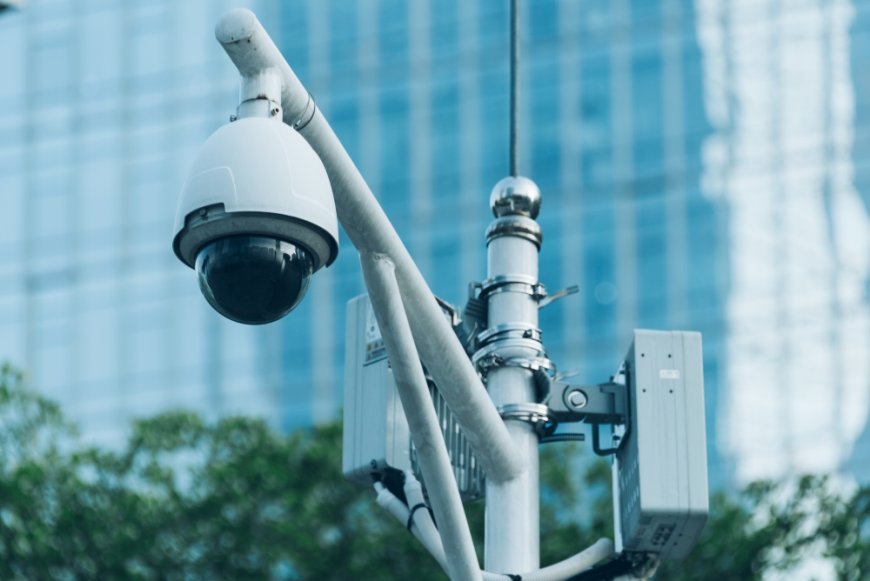
A smart city surveillance system is a cohesive network of interconnected sensors, cameras, and analytics tools designed to observe and interpret real-world events in urban settings. When applied to traffic enforcement, these systems enable 24/7 monitoring of road activity, providing real-time data that supports prompt decision-making and automated violation detection.
Unlike conventional surveillance setups, modern systems are equipped with AI algorithms capable of identifying specific infractionssuch as riding without a helmet, using mobile phones while driving, or disobeying traffic signals. This level of granularity allows authorities to issue automated penalties with high accuracy, thereby promoting compliance through consistent enforcement.
Real-Time Violation Detection: Reducing Human Error and Increasing Efficiency
One of the key advantages of intelligent surveillance systems is their ability to eliminate human limitations. Cameras integrated with video analytics can detect multiple types of violations simultaneously and relay this information to a centralized command center. Infractions such as over-speeding, illegal parking, and wrong-way driving can be identified within seconds, often before a human officer would even react.
Moreover, the data collected is not limited to enforcement. It can be used to generate heatmaps of high-risk zones, determine peak violation times, and inform infrastructure planning or policy revisions. As cities grow, the ability to make informed, data-backed decisions becomes invaluable in reducing both accidents and enforcement costs.
Behavior Modification Through Automated Enforcement
The presence of intelligent surveillance acts as a deterrent in itself. When drivers know they are under constant, accurate observation and that violations will result in automated fines, they are more likely to adopt safer driving habits. This psychological shiftfrom a culture of avoidance to one of adherenceis a key outcome of persistent surveillance.
In addition, these systems reduce the potential for human bias or inconsistency in issuing penalties. Every vehicle is treated equally, and evidence-based documentation ensures transparency. Over time, this fairness reinforces public trust in the traffic management system.
Integration with Autonomous Systems in Security
The evolution of surveillance does not stop at cameras and sensors. The next frontier involves the integration of Autonomous Systems in Security, which are capable of self-learning and decision-making. These systems can analyze vast datasets, recognize patterns, and even predict potential violations before they occur.
For instance, by studying historical data, autonomous surveillance can flag suspicious driving behavior, alert authorities in real-time, or redirect traffic flow during high-risk periods. The confluence of automation and intelligence not only strengthens enforcement but also contributes to the creation of proactive, self-regulating urban environments.
Addressing Implementation Challenges
While the benefits are significant, deploying a smart surveillance infrastructure in urban settings does come with challenges. These include concerns around data privacy, system interoperability, and the need for reliable connectivity. Furthermore, integrating such systems with existing urban frameworks requires careful planning, public awareness campaigns, and ongoing technical support.
However, with advances in edge computing and 5G connectivity, many of these hurdles are being addressed. Scalable and modular surveillance solutions are now more accessible to city administrators, enabling gradual but impactful transformations.
Conclusion
As cities continue to expand and mobility demands grow, relying on traditional methods of traffic enforcement is no longer sustainable. The smart city surveillance system offers a future-ready solution that not only enhances the efficiency of urban traffic management but also drives behavioral change through consistent, unbiased monitoring.
By incorporating intelligent automation, real-time analytics, and autonomous decision-making, these systems represent the backbone of a safer, smarter, and more disciplined transportation ecosystem. As technology continues to evolve, their role in urban governance will only become more prominent, making them essential tools in the quest for road safety and traffic compliance.