
























Understanding the Vital Energy: A Comprehensive Look at the Definition of Prana
Prana, a Sanskrit word meaning "life force" or "vital energy," is a fundamental concept in Indian philosophy and yogic traditions. It refers to the invisible energy that permeates the universe and sustains all living beings. Just as oxygen is essential for physical survival, prana is believed to be the vital force that maintains life and consciousness. Understanding the definition of prana is key to exploring practices such as yoga, pranayama (breath control), and Ayurveda, which aim to balance and enhance this vital energy for overall well-being.
In the realm of ancient Indian philosophy and wellness systems such as yoga, Ayurveda, and Vedanta, one term stands out as both foundational and transformativeprana. The definition of prana is often translated as life force or vital energy, but this simple translation only scratches the surface of its profound significance. To truly understand the concept, we must explore its roots, meanings, and the roles it plays in the physical, mental, and spiritual dimensions of life.
The Origin and Meaning of Prana
The word prana is derived from the Sanskrit root pra meaning forth and an meaning to breathe or live. Thus, prana can be interpreted as that which moves and sustains life. According to ancient texts like the Upanishads and the Yoga Sutras, prana is the universal life energy that flows through all living beings, much like electricity flows through a wire. It is not simply breath, but the subtle energy that underlies breathing, heartbeat, digestion, thought, and every physiological and psychological function.
When discussing the definition of prana, it's important to note that it is not confined to the human body. Prana is believed to be present everywherein the air, in food, in sunlight, and in nature. It is the animating force behind everything in the cosmos.
Prana in the Human Body
Within the body, prana flows through an intricate network of energy channels called nadis, and it is concentrated in specific energy centers known as chakras. According to yogic science, maintaining a balanced flow of prana through these channels is essential for health and well-being.
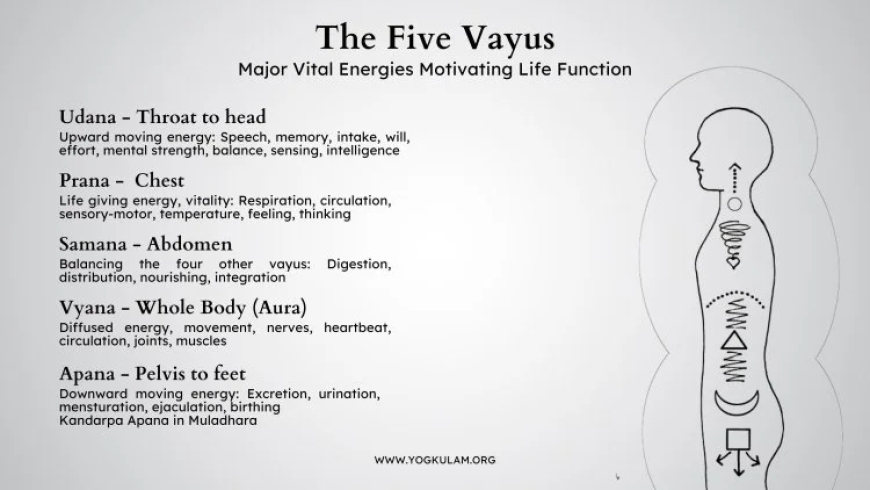
There are five primary forms of prana, known as the pancha pranas:
-
Prana Vayu Governs the intake of substances such as air and food.
-
Apana Vayu Responsible for elimination and downward energy flow.
-
Samana Vayu Manages digestion and assimilation.
-
Udana Vayu Controls speech and expression.
-
Vyana Vayu Circulates energy throughout the body.
Together, these five aspects ensure the proper functioning of the body and mind.
Prana and Breath: A Common Misconception
Although prana is closely associated with the breath, they are not the same thing. Breath is the physical manifestation, while prana is the underlying energy. Breathing techniques in yoga, known as pranayama, are designed to control and expand prana. The word pranayama itself combines prana (life force) with ayama (extension or control), meaning the extension or regulation of life force through conscious breathing.
Prana in Daily Life and Spiritual Practice
Understanding the definition of prana has practical applications beyond the yoga mat. In Ayurveda, the traditional system of Indian medicine, imbalances in prana are linked to disease and dysfunction. Practices like proper diet, breathing exercises, meditation, and exposure to natural environments are all recommended to increase and balance prana.
On a spiritual level, increased awareness and control of prana are seen as essential for awakening higher states of consciousness. In deep meditation, yogis report experiences of profound stillness and energy, where prana is no longer scattered but fully harnessed, leading to inner peace and enlightenment.
Modern Science and Prana
While modern science does not use the term prana, similar concepts appear in discussions of bioenergetics, electromagnetism in the body, and even quantum biology. Some researchers have begun to explore how subtle energy fields might affect health and consciousness, echoing the ancient insights about prana.
Conclusion
In summary, the definition of prana encompasses far more than a simple life forceit is the dynamic, all-pervading energy that sustains not only human life but all of creation. Whether approached from a spiritual, philosophical, or practical health perspective, prana remains a cornerstone concept in understanding how we live, breathe, and connect with the world around us. Embracing this ancient wisdom offers pathways to greater vitality, balance, and inner harmony in todays fast-paced world.